
For many years, creatine carried a very specific reputation. It was associated with gym culture, strength athletes, and the pursuit of performance. In popular imagination it belonged to the world of bodybuilding and competitive sport — something used by younger men chasing heavier lifts and faster sprint times.
Yet the scientific conversation around creatine has evolved considerably over the past two decades. What was once regarded as a niche sports supplement is now being examined through a very different lens. Researchers studying aging, muscle preservation, brain health, and cellular energy metabolism have begun to look at creatine not simply as a performance aid, but as a compound that may support several of the biological systems that decline with age.
This shift reflects a broader change in how we think about longevity. Healthy aging is no longer defined simply by the absence of disease. Increasingly, the focus has moved toward preserving function — maintaining muscle mass, sustaining cognitive clarity, protecting metabolic health, and retaining the physical capacity required for independence.
From that perspective, compounds and behaviours that support the body’s energy systems become particularly interesting.
Creatine sits directly within those systems.
The question is no longer whether creatine improves gym performance in young athletes. That debate was settled long ago. The more interesting question is whether creatine has a place in the wider conversation about active aging — not as a shortcut or miracle intervention, but as one small tool that may help preserve the muscle, energy, and neurological resilience that allow people to remain active later in life.
The Energy Problem of Aging
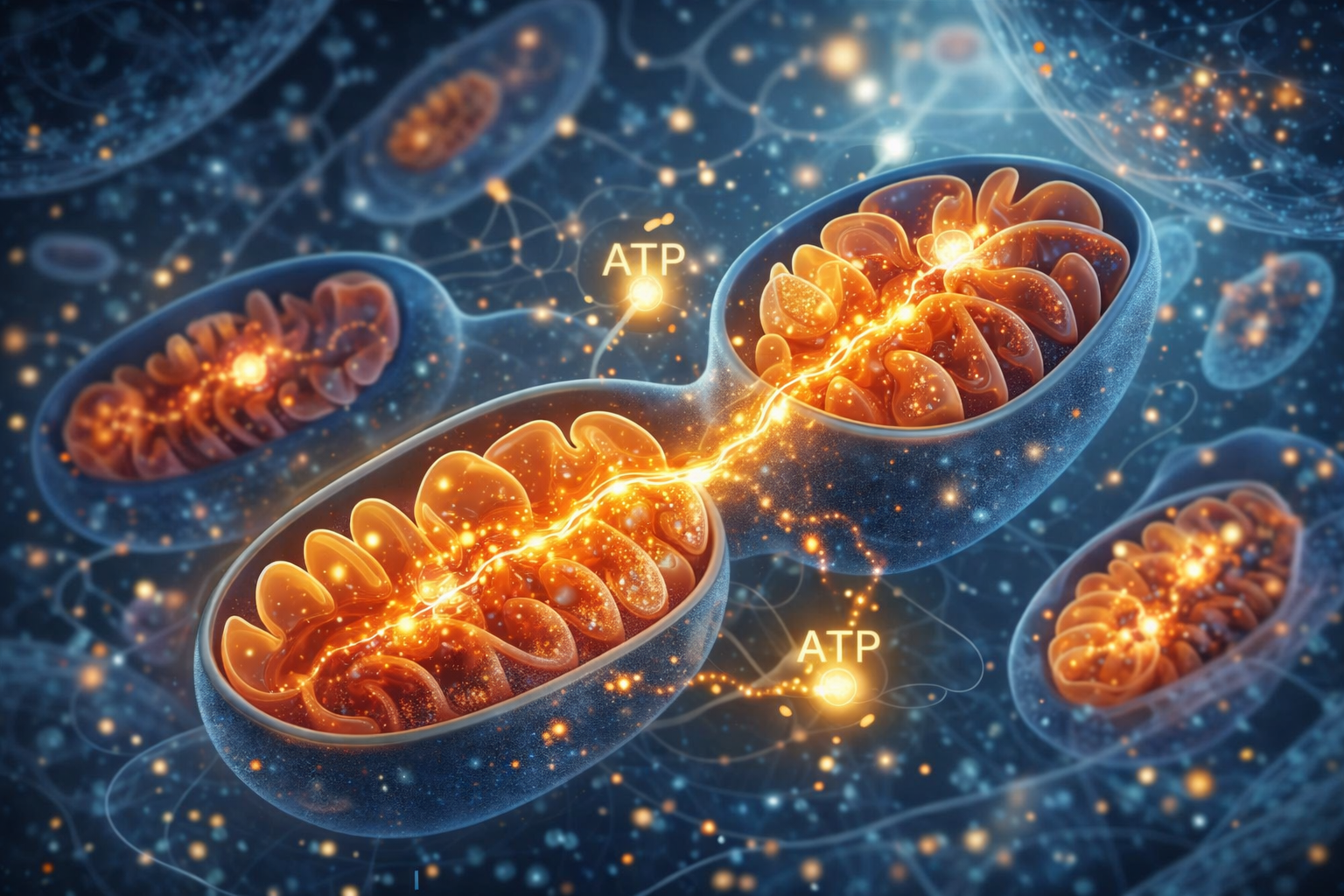
To understand why creatine has become relevant beyond sport, it helps to understand something fundamental about aging: in many ways, it is a story of gradually declining energy efficiency inside our cells.
Every movement we make — standing up from a chair, climbing stairs, lifting shopping bags — requires energy. The same is true for less visible processes such as repairing muscle tissue, maintaining brain function, and regulating the immune system. All of these activities rely on a molecule called ATP (adenosine triphosphate).
ATP is often described as the body’s energy currency. When a muscle contracts or a nerve cell sends a signal, ATP is broken down and releases energy that powers that action. Once ATP has been used, it must be regenerated so the body can continue functioning. This constant cycle of breaking down and rebuilding ATP happens thousands of times every second throughout the body.
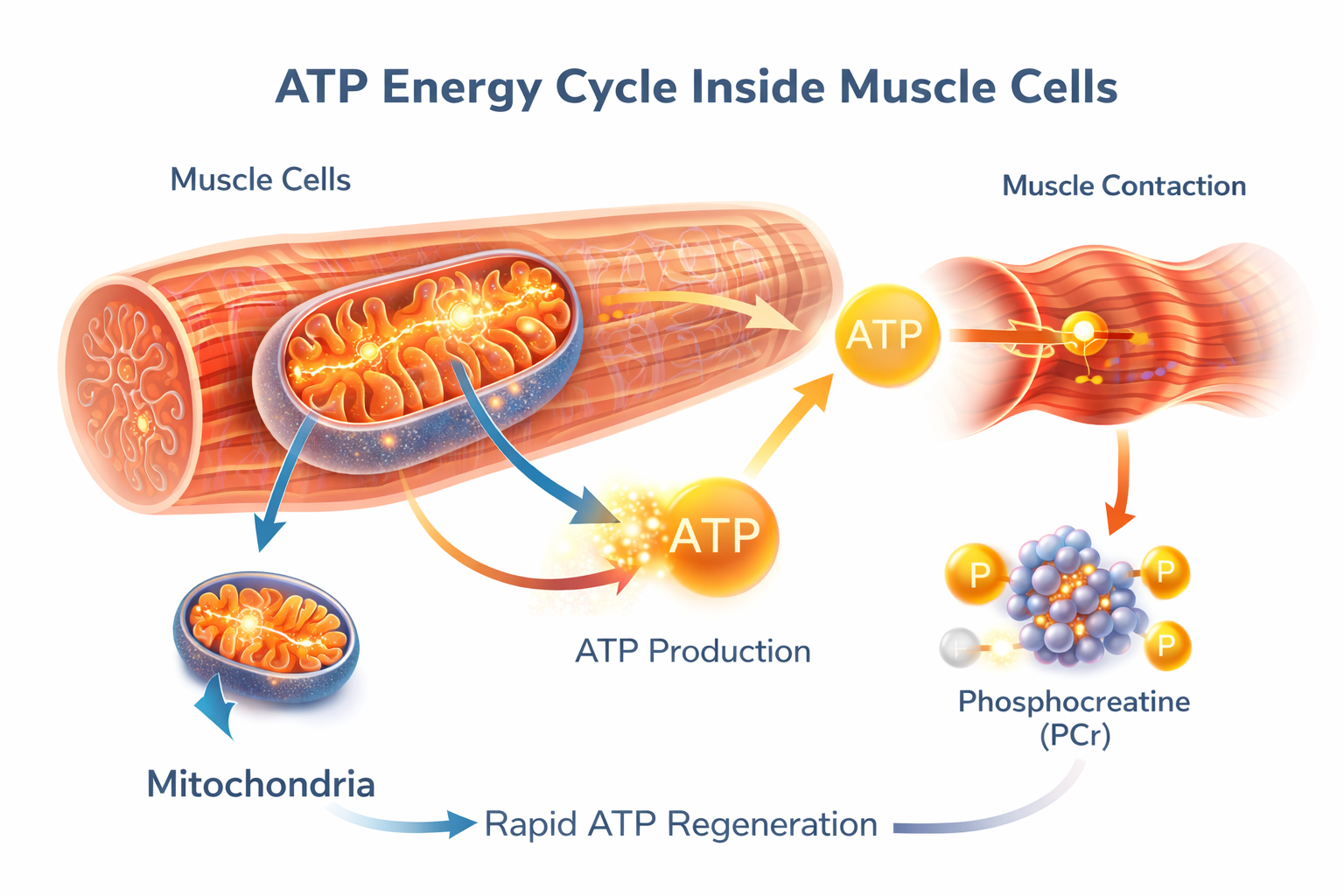
The structures responsible for producing much of this ATP are the mitochondria — tiny energy-producing units inside our cells. You can think of mitochondria as microscopic power stations. They convert nutrients and oxygen into ATP so that muscles, organs, and the brain have the energy they need to work properly.
When mitochondrial function is efficient, energy production is smooth and reliable. We recover well from exercise, maintain muscle strength, think clearly, and feel physically capable. But with age, mitochondrial efficiency tends to decline slightly. Cells produce energy a little less effectively, muscle mass slowly reduces, and the body’s ability to regenerate ATP during demanding activity becomes less robust.
None of these changes are catastrophic in isolation. Most people will not notice them from one year to the next. But like many biological shifts associated with aging, they accumulate gradually over time. A small reduction in cellular energy, combined with reduced muscle mass and slower recovery, can slowly translate into fatigue, reduced physical capacity, and a growing sense that everyday physical tasks require more effort than they once did.
This is where creatine becomes relevant.
Creatine is stored in muscle cells as phosphocreatine, a compound that acts as a rapid backup system for ATP regeneration. When energy demand rises suddenly — such as when lifting something heavy or reacting quickly to regain balance — phosphocreatine donates a phosphate molecule that allows ATP to be rebuilt almost instantly. In effect, it helps the cell restore its energy supply more quickly.
Supplementing with creatine increases the amount of phosphocreatine available in muscle tissue. In younger athletes, this translates into improved strength and high-intensity performance. In older adults, the implications may be broader. By supporting the body’s ability to regenerate energy efficiently, creatine may help offset some of the gradual decline in cellular energy systems that accompanies aging.
It does not stop aging. But it may help the body maintain the energy required to remain physically capable for longer.
And this becomes particularly important when we consider one of the most visible physical changes of aging: the gradual loss of muscle mass and strength.
Because muscle is not simply about movement. It is one of the body’s most important organs for maintaining metabolic health, stability, and independence — and it is highly dependent on the energy systems we have just described.
Muscle Loss, Strength Decline and the Biology of Sarcopenia

One of the most visible physical changes that occurs with aging is the gradual loss of muscle mass and strength — a process known as sarcopenia.
Unlike sudden injury or illness, sarcopenia develops slowly. Research suggests that muscle mass begins to decline as early as our thirties, although the changes are subtle for many years. By the time people reach their fifties and sixties, the rate of loss becomes more noticeable. In sedentary adults, muscle mass may decline by around one to two percent per year, with strength declining even faster.
What surprises many people is that strength does not decline simply because muscles become smaller.
A large part of strength loss comes from changes in the nervous system — specifically something called neuromuscular efficiency. Muscles contract when signals from the brain travel through nerves to muscle fibres. In younger individuals, this communication is rapid and coordinated. As we age, those signals can become slightly slower and less efficient. Fewer muscle fibres may be activated at the same time, and reaction speed can decrease.
The result is that a muscle may still be present in size, but it does not produce force as effectively as it once did.
This is why older adults often notice strength changes before they notice visible muscle loss. Tasks such as lifting shopping bags, rising from low chairs, or climbing stairs can begin to feel harder even when muscle size has not dramatically changed.
Left unaddressed, this gradual decline can accelerate. But it is also one of the most modifiable aspects of aging physiology.
Why Resistance Training Matters

The most effective way to slow or reverse sarcopenia is resistance training — exercise that places load or tension on muscles so they are required to work against resistance.
Resistance training does not necessarily mean heavy weights or traditional gym equipment. In practical terms, it simply means asking the muscles to work against something.
That “something” can take many forms: bodyweight exercises such as squats or push-ups, suspension training systems like TRX, resistance bands, medicine balls, or free weights. Even controlled movements such as step-ups or sit-to-stand exercises create resistance when performed deliberately.
The principle is straightforward. When muscles are challenged by load, the body receives a signal that those muscles are needed. In response, the body strengthens them.
Without that signal, the body assumes the muscle is unnecessary and gradually reduces it.
What the Research Shows
A large body of research now demonstrates that resistance training improves muscle strength, mobility, and functional independence in older adults. When creatine supplementation is added to structured resistance training programmes, the results often improve further.
One of the most frequently cited groups studying this interaction is led by researcher Dr Darren Chilibeck from the University of Saskatchewan. In a comprehensive meta-analysis published in 2017, Chilibeck and colleagues examined multiple studies involving older adults performing resistance training while supplementing with creatine.
The findings were consistent across the studies analysed. Participants who combined creatine supplementation with resistance training experienced greater improvements in lean muscle mass and strength compared with those performing resistance training alone.
Importantly, these participants were not elite athletes. They were typical older adults engaged in structured exercise programmes designed to maintain health and functional ability.
The improvements were not extreme or dramatic. They were incremental — but meaningful. Over time, incremental improvements in muscle strength translate directly into improved daily function.
Why Creatine Appears to Help
The reasons creatine enhances these adaptations are still being studied, but several explanations are likely.
First, as discussed earlier, creatine improves the muscle cell’s ability to regenerate ATP. When energy availability is slightly higher, people are often able to perform an extra repetition or maintain training quality during a workout. Over weeks and months, that additional training stimulus contributes to stronger muscles.
Second, creatine increases water content within muscle cells. This process, known as cellular hydration, appears to create an environment that supports muscle repair and growth.
Third, some studies suggest creatine may influence satellite cells, the small stem-like cells responsible for repairing and rebuilding muscle fibres after exercise.
Taken together, these effects mean that creatine does not build muscle directly. Instead, it enhances the body’s response to training.
What the Research Shows
A large body of research now demonstrates that resistance training improves muscle strength, mobility, and functional independence in older adults. When creatine supplementation is added to structured resistance training programmes, the results often improve further.
One of the most frequently cited groups studying this interaction is led by researcher Dr Darren Chilibeck from the University of Saskatchewan. In a comprehensive meta-analysis published in 2017, Chilibeck and colleagues examined multiple studies involving older adults performing resistance training while supplementing with creatine.
The findings were consistent across the studies analysed. Participants who combined creatine supplementation with resistance training experienced greater improvements in lean muscle mass and strength compared with those performing resistance training alone.
Importantly, these participants were not elite athletes. They were typical older adults engaged in structured exercise programmes designed to maintain health and functional ability.
The improvements were not extreme or dramatic. They were incremental — but meaningful. Over time, incremental improvements in muscle strength translate directly into improved daily function.
Why Creatine Appears to Help
The reasons creatine enhances these adaptations are still being studied, but several explanations are likely.
First, as discussed earlier, creatine improves the muscle cell’s ability to regenerate ATP. When energy availability is slightly higher, people are often able to perform an extra repetition or maintain training quality during a workout. Over weeks and months, that additional training stimulus contributes to stronger muscles.
Second, creatine increases water content within muscle cells. This process, known as cellular hydration, appears to create an environment that supports muscle repair and growth.
Third, some studies suggest creatine may influence satellite cells, the small stem-like cells responsible for repairing and rebuilding muscle fibres after exercise.
Taken together, these effects mean that creatine does not build muscle directly. Instead, it enhances the body’s response to training.
The Role of Anabolic Resistance
Another concept that becomes important with aging is anabolic resistance.
In younger adults, muscle responds quickly to both resistance exercise and protein intake. A modest workout and a meal containing protein will typically stimulate muscle protein synthesis effectively.
As we age, the muscle becomes less sensitive to these signals. Larger training stimuli and slightly higher protein intake are often required to trigger the same response.
This reduced responsiveness is anabolic resistance.
It is one of the reasons strength training and adequate protein intake become more important in later decades of life. Without sufficient stimulus, muscle maintenance becomes more difficult.
Creatine may help by slightly increasing the effectiveness of that stimulus. If it allows someone to train a little harder or recover a little better, it may help overcome part of that resistance.
None of this suggests creatine replaces training.
It simply strengthens the signal that training sends to the body.
And for individuals facing the natural biological changes of aging, even small improvements in that signal may help preserve muscle strength for longer.
The Brain Connection

While creatine is best known for its role in muscle performance, one of the most interesting areas of research now concerns its effects on the brain.
The brain is one of the most energy-demanding organs in the body. Although it represents only about two percent of total body weight, it uses roughly twenty percent of the body’s daily energy supply.
Every thought, memory, and decision relies on billions of nerve cells communicating with one another, and that communication requires a constant supply of energy.
Just like muscles, the brain depends on ATP to function.
When a nerve cell sends a signal, processes information, or forms a memory, ATP is used to power that activity. The brain therefore needs a steady and reliable way to regenerate ATP so that these processes continue smoothly.
Creatine appears to help support this system.
Just as it does in muscle tissue, creatine is stored in brain cells as phosphocreatine, where it acts as a small energy reserve. When brain cells suddenly require more energy — during intense thinking, learning, or problem solving — phosphocreatine can help regenerate ATP quickly and keep those cells functioning efficiently.
In simple terms, creatine helps ensure that brain cells have access to energy when they need it most.
Because of this role in energy metabolism, researchers have begun exploring whether creatine might support certain aspects of cognitive performance.
Some studies have found modest improvements in tasks involving short-term memory, reasoning ability, and mental processing speed in people taking creatine supplements. These effects appear most noticeable when the brain is under stress — for example during sleep deprivation, intense mental work, or metabolic strain.
This makes sense when viewed through the lens of energy supply. If brain cells have access to a slightly larger energy reserve, they may function more efficiently during demanding tasks.
Scientists are also investigating whether creatine could play a role in protecting the brain against age-related decline.
Early research suggests that impaired cellular energy production may contribute to neurodegenerative conditions such as Parkinson’s disease and Alzheimer’s disease. Because creatine helps support cellular energy systems, it has been explored as a potential tool for supporting neuronal resilience.
So far, the results are promising but not definitive. Creatine is not a treatment or cure for neurodegenerative disease. However, researchers continue to study whether maintaining healthier cellular energy systems may help protect brain function over the long term.
For older adults, this area of research is particularly interesting.
Most people are not simply concerned about staying physically independent. They also want to maintain mental clarity — the ability to remember, concentrate, and remain cognitively engaged with life.
Creatine may not be the primary solution to cognitive aging, but its role in supporting cellular energy metabolism means it could form one small part of a broader strategy to maintain both physical and mental vitality as we age.
Safety and Misconceptions
Despite being one of the most extensively researched supplements in nutrition science, creatine is still sometimes viewed with caution, particularly among older adults. Much of this concern centres on the belief that creatine may damage the kidneys.
This concern is understandable, but it is not supported by the current scientific evidence.
Over the past three decades, creatine has been investigated in hundreds of clinical trials involving athletes, sedentary adults, and older populations. Reviews published in journals such as The Journal of the International Society of Sports Nutrition and Medicine & Science in Sports & Exercise consistently conclude that creatine supplementation at standard doses is safe for healthy individuals.
Typical daily intake used in research ranges from 3–5 grams per day, a level that increases the body’s natural creatine stores without placing measurable strain on kidney function. Long-term studies following individuals for months and even years have found no evidence of impaired kidney health in people with normal renal function.
Part of the confusion comes from the fact that creatine supplementation can slightly increase blood levels of creatinine, a compound that doctors sometimes use as a marker when assessing kidney function. However, this rise simply reflects higher creatine turnover in the body and does not indicate kidney damage. In other words, the test marker changes, but kidney health does not.
Medical guidance is still important. Individuals who already have diagnosed kidney disease or impaired renal function should always consult their doctor before taking creatine or any supplement. This is standard medical practice for any nutritional intervention.
For otherwise healthy adults, however, the scientific consensus is clear: creatine supplementation at recommended doses is safe.
In fact, because of the large volume of research supporting both its safety and effectiveness, creatine is often described in the scientific literature as one of the most well-studied and well-understood supplements available today.
Viewing Aging Through the Lens of Energy
What makes creatine particularly interesting in the context of aging is its role in the body’s energy systems.
Much of what we associate with aging — increasing fatigue, slower recovery, declining muscle strength, and reduced physical capacity — can be traced back to changes in how efficiently our cells produce and use energy.
At the centre of this process are the mitochondria, the microscopic structures inside cells responsible for producing ATP. If ATP is the body’s energy currency, mitochondria are the power stations that generate it.
When mitochondrial function is strong, energy production is efficient. Muscles contract easily, the brain processes information clearly, and the body recovers well from physical effort.
With age, however, mitochondrial function can gradually decline. Scientists often refer to this as mitochondrial dysfunction. The mitochondria themselves may become fewer in number, less efficient at producing energy, or more susceptible to damage from oxidative stress.
This decline does not occur suddenly, but over time it can contribute to many of the symptoms people associate with aging: fatigue during activities that once felt easy, slower recovery after exercise, and a gradual loss of physical capacity.
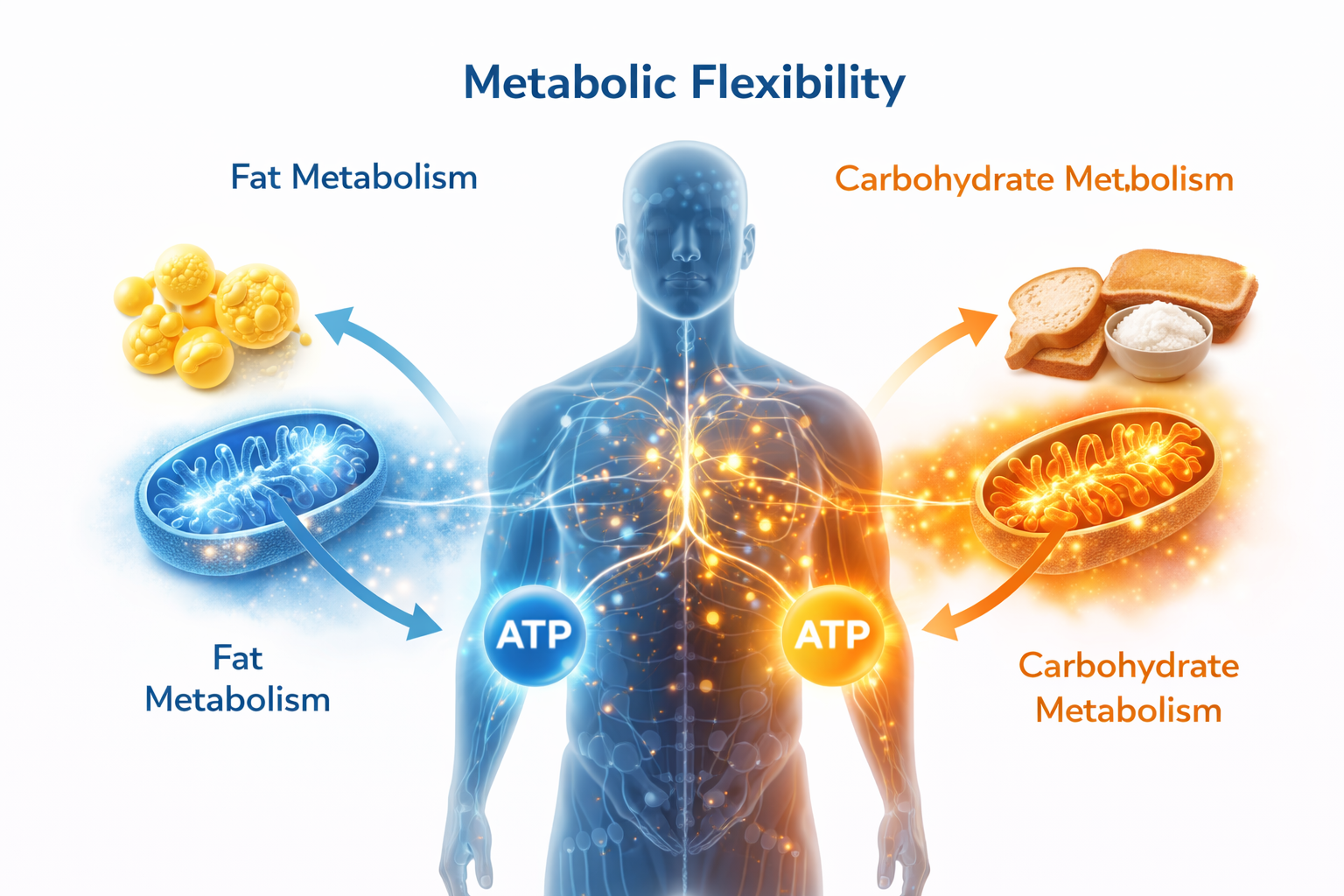
Another concept closely linked to mitochondrial health is metabolic flexibility.
Metabolic flexibility refers to the body’s ability to switch efficiently between different fuel sources — primarily fats and carbohydrates — depending on the situation. For example, during low-intensity activity such as walking, the body ideally burns more fat for energy. During more demanding activity, such as climbing stairs quickly or lifting something heavy, it shifts toward using carbohydrates.
When metabolic flexibility is strong, this switching happens smoothly. Energy production remains stable, and the body adapts easily to changes in activity levels.
But when metabolic flexibility declines — something that often occurs with aging, inactivity, or poor metabolic health — the body becomes less efficient at producing energy. People may experience unstable energy levels, fatigue during moderate activity, and reduced tolerance for physical exertion.
In simple terms, the engine that produces energy becomes less adaptable.
Creatine intersects with this system in a useful way.
As discussed earlier, creatine increases the availability of phosphocreatine, a compound that helps regenerate ATP quickly when energy demand rises. This rapid regeneration is particularly important during moments when the body suddenly requires more power — standing up quickly, catching oneself during a stumble, lifting a suitcase, or climbing a steep flight of stairs.
By helping the body restore ATP more efficiently, creatine acts as a kind of energy buffer. It does not produce energy itself, but it helps maintain the supply when demand temporarily exceeds production.
This buffering effect becomes increasingly valuable when mitochondrial efficiency declines slightly with age.
At a cellular level, this means individual muscle and nerve cells are better able to maintain their energy balance during demanding tasks. At a whole-body level, the effect may appear as improved strength during exercise, reduced fatigue during daily activities, and better overall physical capacity.
The connection between cellular energy and quality of life is often overlooked.
When cells produce energy efficiently, the body feels capable. Movement is easier. Recovery is faster.
Physical activity remains enjoyable rather than exhausting.
When energy production becomes compromised, everyday tasks gradually require more effort. People move less, fatigue more quickly, and physical capacity shrinks.
From this perspective, supporting the body’s energy systems is not simply about improving athletic performance.
It is about preserving the biological foundations that allow people to remain active and engaged with life.
Creatine, by supporting the regeneration of ATP within muscle and brain cells, may help maintain that energy balance as the decades progress.
It does not reverse aging.
But it may help the body maintain the energy required to live actively within it.
A Measured Perspective

Creatine is neither a miracle supplement nor a passing trend.
It is a naturally occurring compound that plays a role in one of the body’s most fundamental biological processes: the production and regeneration of cellular energy.
Over the past three decades, research has shown that creatine supplementation can increase the availability of phosphocreatine within muscle and brain tissue. In practical terms, this allows cells to regenerate ATP — the body’s energy currency — more efficiently during moments of high demand.
For younger athletes, this translates into improvements in strength, power, and high-intensity performance.
For older adults, the implications may be broader.
Many of the physiological changes associated with aging — loss of muscle mass, declining strength, slower recovery, and increasing fatigue — are linked to gradual changes in the body’s energy systems.
Mitochondria become less efficient, muscle tissue becomes less responsive to training and nutrition, and the body’s ability to regenerate energy during demanding activity becomes slightly less robust.
Creatine does not reverse these processes. But by supporting ATP regeneration, it may help the body maintain its energy balance during both physical and cognitive tasks.
When combined with resistance training, adequate protein intake, regular aerobic activity, and good sleep, creatine may support the biological systems responsible for preserving strength, metabolic health, and cognitive resilience.
It is not a replacement for these behaviours.
It works alongside them.
Longevity is rarely achieved through a single intervention. It is the result of small, consistent practices that help the body maintain function as the decades pass.
Strength protects independence. Aerobic fitness protects the heart and brain. Nutrition supports recovery and metabolic health. Sleep restores the systems that allow the body to adapt.
Creatine may simply help these systems operate a little more efficiently.
And when the goal is not merely to live longer, but to remain capable, energetic, and mentally engaged with life, even modest improvements in the body’s ability to produce and use energy can have meaningful consequences.
Active aging is not about preserving youth.
It is about preserving capacity.
The capacity to move confidently, think clearly, travel freely, and participate fully in life.
Creatine, used thoughtfully within a broader lifestyle strategy, may help support that capacity for longer.
What The Research Shows
Creatine is one of the most extensively studied supplements in nutrition and exercise science. The following research highlights its safety and potential benefits for older adults.
Creatine and Strength in Older Adults
A 2017 meta-analysis led by Dr Darren Chilibeck at the University of Saskatchewan reviewed multiple clinical trials examining creatine supplementation in older adults performing resistance training. The researchers found that participants taking creatine experienced greater improvements in muscle strength and lean muscle mass compared with those performing resistance training alone.
(Chilibeck PD et al., Open Access Journal of Sports Medicine, 2017)
Creatine Safety
Extensive reviews published in the Journal of the International Society of Sports Nutrition have concluded that creatine supplementation at recommended doses of 3–5 grams per day is safe for healthy individuals and has no evidence of harmful effects on kidney function in people without pre-existing kidney disease.
(Kreider RB et al., Journal of the International Society of Sports Nutrition, 2017)
Creatine and Brain Energy Metabolism
Research has also examined creatine’s role in supporting brain energy systems. Studies suggest that creatine may help support short-term memory and mental processing, particularly in situations where the brain’s energy demand is increased.
(Rawson ES & Venezia AC, Amino Acids, 2011)
Creatine and Healthy Aging
More recent research has explored creatine as a potential tool for supporting muscle preservation, physical function, and cellular energy systems in aging populations when combined with resistance training and adequate nutrition.
(Candow DG et al., Nutrients, 2021)